If your Airbnb calendar has more gaps than you want, the fix is usually not one big change. It is a series of small levers that move together: more qualified views, a higher conversion rate, and a price that matches demand.
This guide is a practical answer to how to increase Airbnb bookings without paid ads, without gimmicks, and without turning your property into a discount listing. It pairs well with our companion piece on why an Airbnb is not getting bookings — read that first if you are not sure where the leak is.
1. The three levers that actually matter
Every booking comes from the same chain: a guest sees your listing, trusts it, and decides the price is fair. Increase any one of those three and bookings rise. Increase all three and the effect compounds.
Demand. How many qualified guests see your listing? This is driven by search placement, cover-photo appeal, and reviews.
Conversion. Of the guests who view your listing, how many book? This is driven by photos, description, response time, and social proof.
Price fit. Is your nightly rate aligned with similar properties for similar dates? Even a great listing underperforms if it is priced out of its bracket.
The fix. Do not chase one tactic. Audit all three levers, then fix the weakest one first.
2. Your listing is a sales page, not a brochure
Most hosts write listings that describe every feature. Guests skim. They want to know what the stay feels like and whether the property matches their trip. Your title, first five photos, and first two sentences do almost all of the work.
Lead the title with the most desirable detail: the view, the neighborhood, or a unique feature. "Sunlit studio near the old town" beats "Cozy comfortable studio with amenities."
Your first five photos should answer the guest's main questions in order: what is the space, where do I sleep, what is the bathroom like, what is the view, and what is nearby. Every photo after that supports the story.
The fix. Rewrite your title and reorder your first five photos this week. That alone often lifts click-through rate.
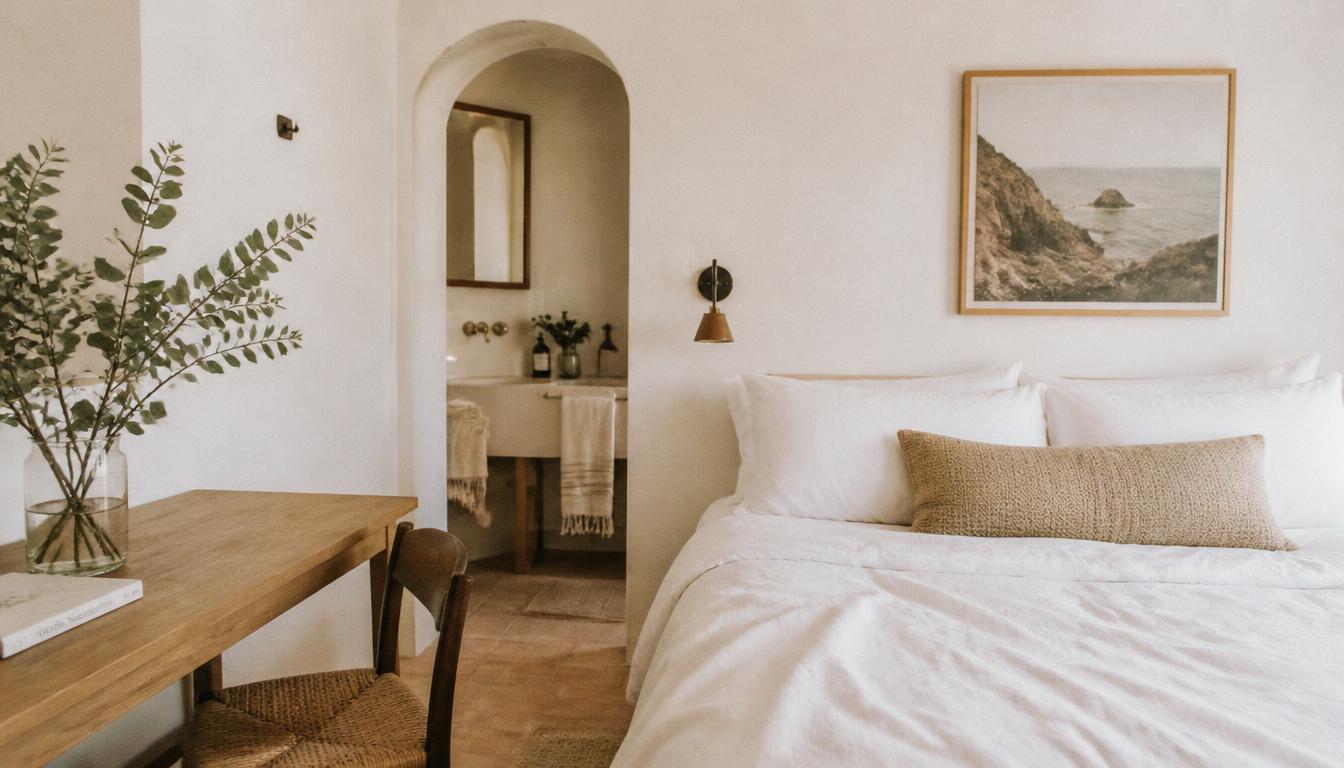
3. Photos are the highest-ROI upgrade
Strong, current photos are the single biggest controllable factor in booking rate. Airbnb reports that listings with high-quality, up-to-date photos can receive around 2.5 times more bookings than those without.
The key word is current. A professional shoot from two years ago is better than nothing, but guests notice dated decor, old seasons, and stale angles. Fresh content signals that the property is active and well maintained.
Relative booking rate for listings with current, compelling photos vs. outdated or weak visuals.
The fix. If you can only do one thing this month, refresh your photos. Use natural light, shoot at golden hour, and show the spaces guests actually use.
4. Reviews are social proof you can influence
Guests read reviews before they read descriptions. A listing with twenty recent five-star reviews converts better than an identical listing with fewer or older reviews. The good news is that review momentum is partly in your control.
The simplest system: message guests the morning after check-in to make sure everything is fine, then send a polite review request within 24 hours of checkout. Most satisfied guests will leave one if asked promptly.
When you get a less-than-perfect review, reply publicly with empathy and specifics. Future guests care more about how you handle problems than the fact that one happened.
The fix. Set a checkout reminder to request reviews. Aim to keep your average above 4.8 and your most recent ten reviews positive.
5. Response speed and instant book
Airbnb's search algorithm rewards hosts who respond quickly. A response time under an hour and a high acceptance rate improve placement. Instant Book removes friction for guests and signals to the platform that you are a reliable host.
If you are worried about problem guests, use Instant Book with house rules and a requirement for government ID. The small increase in risk is usually outweighed by the ranking boost and the extra bookings.
The fix. Turn on Instant Book and aim to answer inquiries within an hour during waking hours.
6. Pricing: match the market, then capture demand
The goal is not to be the cheapest listing. The goal is to be the best value in your tier. Start with dynamic pricing tools or manual checks of comparable properties for the next 60 days.
Raise prices when local demand is high: events, weekends, holidays, and peak season. Lower them slightly during soft periods to avoid empty nights. A booked night at 85% of your target rate beats an empty night at 100%.
For a property with a $200 target nightly rate.
The fix. Review your next 30 days of pricing every week. Adjust for local events and last-minute gaps.
7. Keep the calendar attractive
A calendar with long minimum-stay requirements, distant check-in windows, or frequent blocked dates gets fewer bookings. Guests plan trips with flexibility in mind, especially for short-term rentals.
If you are in a competitive market, try shorter minimum stays for weekdays and slightly longer ones for weekends. Open your calendar at least three months out, and avoid blocking dates unless you truly need them.
The fix. Reduce minimum stay to one or two nights for weekdays and open your calendar 90 days in advance.
8. Use content to drive direct and platform traffic
Listing platforms are not the only source of guests. A steady stream of authentic photos and short videos on Instagram, TikTok, and Pinterest can bring in direct bookings and improve your listing's perceived value.
You do not need to become a content creator yourself. User-generated content collaborations let you host a vetted travel creator in exchange for a defined set of photos and reels you own. It costs far less than an agency shoot and gives you assets that look like real guest moments.
We covered the full approach in our guide to hotel social media marketing. The short version: fresh, authentic content increases engagement, which increases visibility, which increases bookings.
The fix. Plan one content refresh per quarter. A single creator stay can produce three months of usable assets.
9. A 90-day plan to increase bookings
Week 1. Rewrite your title, reorder your first five photos, and turn on Instant Book.
Weeks 2 to 4. Shoot or commission fresh photos. Update your listing with the new set. Review your pricing against comparable properties.
Weeks 5 to 8. Implement a review-request system. Adjust minimum stays and calendar openness. Track inquiry response time.
Weeks 9 to 12. Run one creator collaboration or content refresh. Use the new assets across your listing, social channels, and any direct booking page.
The fix. Treat this as a system, not a one-time push. The hosts who win are the ones who revisit these levers every month.
10. When to look deeper
If you have done the above and bookings are still flat, the issue may be structural: your location, your amenities, your reviews, or your pricing relative to competition. Our diagnostic article on why an Airbnb is not getting bookings walks through the nine most common root causes and how to fix each one.
Get help filling your calendar
Increasing bookings is a mix of listing optimization, pricing discipline, and fresh content. If you want a structured way to refill your visual library without the cost of an agency shoot, you can join the Soltie property waitlist. We match properties with vetted travel creators for content collaborations, not influencer campaigns, and keep identities hidden until both sides confirm the match.