If you run a boutique hotel, villa or short-term rental, you already know the trap: social media takes time you don't have, and the posts that take the most effort often get the smallest reach.
This guide is for property owners who want a practical hotel social media marketing strategy without hiring an agency, buying followers, or pretending to be an influencer. The approach below is what we built Soltie around: user-generated content you own, produced by creators you host, at a fraction of the cost of traditional production.
1. The real problem with hotel social media today
Most property accounts look the same. A polished lobby shot. A breakfast flat lay. A drone video of the pool. All beautiful, all interchangeable, and all screaming "this was made by a brand."
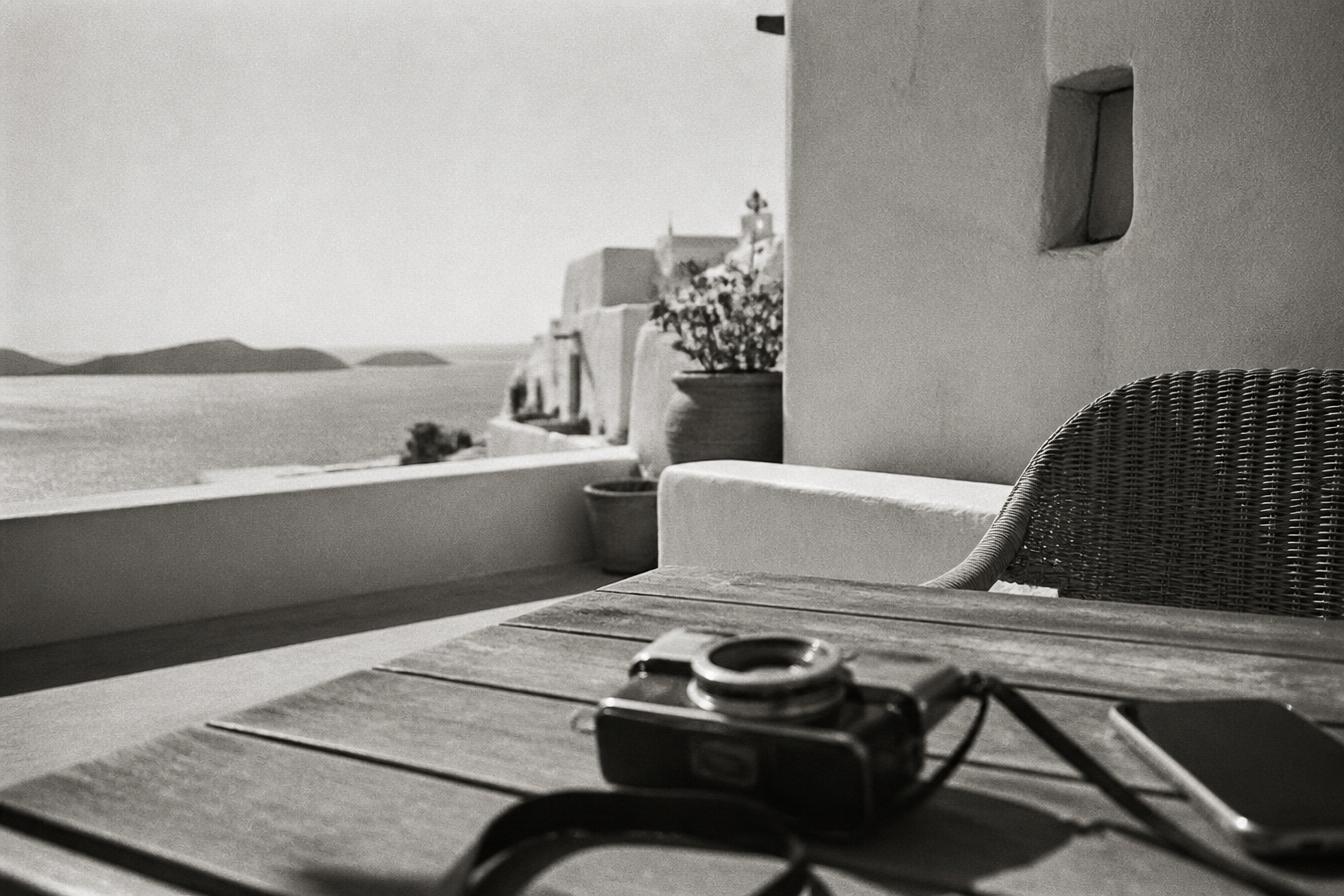
Guests scroll past brand-perfect content because they can smell production. They want to see what staying at your property actually feels like: the light at 7am, the slightly imperfect table on the terrace, the way a real person relaxes in the space.
The other problem is volume. One professional shoot gives you 30 to 50 usable images. That sounds like a lot until you need fresh feed posts, stories, reels, listing photos and ads every week. Within two months you're recycling the same shots, and the algorithm notices.
The fix. Stop treating social media as a quarterly photography expense. Treat it as a content system you refill continuously with real guest and creator moments.
2. What hotel social media marketing means in 2026
Hotel social media marketing is no longer just "post nice photos of the property." It is the work of turning the experience you sell into a steady stream of short-form video, stills and stories that answer one question: "What would my stay actually be like?"
The platforms that matter for properties are Instagram and TikTok for discovery, Pinterest for planning-phase traffic, and your own listing site or booking page for conversion. Each needs a slightly different format, but they all need the same raw material: authentic visual proof.
Your job is not to become a content studio. Your job is to collect that proof efficiently and distribute it consistently.
3. Why brand content underperforms
Brand content — professional shoots, agency edits, perfectly lit interiors — has a role. It belongs on your homepage, your booking engine and your listing cover photo. It is proof of quality.
But on social feeds, it performs worse than real guest content because it lacks the signals people trust: spontaneity, variety and a point of view that is not yours. A study by Stackla found that consumers are 2.4 times more likely to view user-generated content as authentic compared to brand-created content. That trust translates directly into engagement.
Average relative engagement rate by content type, hospitality social accounts.
The fix. Use brand content for trust at the point of purchase. Use UGC-style content for discovery and engagement on social feeds.
4. The UGC alternative: owned, not borrowed
There is a critical distinction most articles skip. Influencer marketing borrows someone else's audience and pays for reach. UGC-for-hire borrows someone's creative skill and pays for the assets. The posts live on your channels, not theirs.
For a property, this is a much better deal. You get photos and short-form video you can use on your website, listings, ads and social accounts. You do not pay by follower count. You do not hope a post converts. You own the library.
The model is simple: host a vetted travel creator for a short stay. In exchange, they deliver a defined set of assets — typically reels and stills — that you can publish as your own. This is the model Soltie was built to facilitate.
5. The cost gap: agency shoot vs. creator stay
A single professional content shoot for a boutique property typically runs from $800 to $3,000 when you include photographer, videographer, travel and editing. That buys one batch of assets, usually delivered in a few weeks.
A creator collaboration can cost the equivalent of one unbooked night. The creator covers their own travel motivation (they want the experience), shoots during the actual stay, and delivers content that looks like your property through a guest's eyes.
Estimated for a 10-reel + 20-photo deliverable for a boutique property.
The fix. If your average nightly rate is $150 to $400, one or two empty nights can fund an entire quarter of creator content. That is the economics that make UGC scalable for small properties.
6. The authenticity advantage
Authenticity is not a buzzword here. It is a measurable content quality. UGC-style content performs better because it includes the small, unscripted details that make a property memorable: the way coffee is served, the texture of the linens, the view from the shower, the walk to the beach.
These details are hard to stage and expensive to capture in a traditional shoot. A creator staying at your property naturally collects them because they are living the experience.
More importantly, this content ages better. A professional shoot looks dated the moment you change a cushion. A guest-style reel of someone making breakfast in your kitchen stays relevant as long as the room exists.
7. The booking connection
Strong visual content does not just improve engagement; it changes booking behavior. Properties with current, compelling photos consistently convert better on listing platforms and direct booking sites. Airbnb reports that properties with strong, current photos can see around 2.5 times more bookings than those without.
The mechanism is straightforward. Better content increases click-through rate on search grids. Higher click-through signals quality to the algorithm. More views with strong conversion data lead to better placement, which leads to more bookings.
The fix. Prioritize content freshness. A library that is 90 days old is already losing relevance. Aim to add new assets every month, even if each batch is small.
8. A simple 90-day hotel social media plan
You do not need a full marketing team to execute this. Here is a minimal plan any property owner can run with one creator collaboration per quarter.
Month 1: shoot and collect. Host one creator for two to three nights. Brief them on the moments you want captured: sunrise on the terrace, the room at golden hour, the local neighborhood, the details guests comment on. Agree in writing on deliverables — for example, 3 reels and 15 stills.
Month 2: publish and test. Post one reel per week on Instagram and TikTok. Use stills for feed posts and stories. Track which scenes get saves and shares, not just likes. Saves mean people are planning a trip.
Month 3: double down. Reuse the top-performing clips as listing photos, website hero images and ad creative. Brief your next creator to capture more of whatever performed best.
The fix. One good collaboration gives you three months of content. The goal is not volume; it is a repeatable rhythm.
9. Common mistakes to avoid
Treating creators like influencers. You are not buying reach. You are hiring a visual storyteller. Judge their portfolio, not their follower count.
Asking for too many staged shots. The value of UGC is that it looks real. Over-directing defeats the purpose.
Forgetting usage rights. Always confirm in writing that you own the delivered assets and can use them across listings, ads and owned channels.
Posting once and moving on. A single batch of content is not a strategy. The properties that win treat content as a recurring operating expense, like cleaning or linens.
Start with one collaboration
Hotel social media marketing works best when it is simple and consistent. You do not need a viral post. You need a steady stream of real, usable content that answers the question every potential guest is asking: "What would it actually feel like to stay here?"
If you want a structured way to connect with vetted travel creators who produce owned content for properties, you can join the Soltie waitlist. We match properties with creators for content collaborations, not influencer campaigns, and we keep identities hidden until both sides confirm the match.